
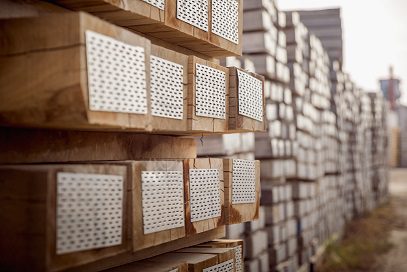
Most passengers never look down at the track. They watch the platform, the clock or the fields sliding past the window. Under the rails, though, lies a long row of heavy beams that carry every trip, from the first commuter service of the morning to the last freight train of the night.
Those beams are called sleepers, and for most of railway history they were made of wood. Modern networks now use several materials, yet timber has kept a clear place in many projects. Factories that produce railway sleepers from hardwood still supply lines in different countries, often for sections where the natural wood is a good fit.
The job of a sleeper looks simple on paper. In practice it involves weight, movement, rain, frost and time, all working on the same piece of hardwood for many years. Knowing a little about that job explains why the material still matters.
The contribution to track stability
A sleeper has a few clear tasks. It holds the two rails at a fixed distance from each other, so the wheels stay exactly where they should. It also passes the weight of each train into the layer of stone ballast below, instead of letting that weight press on a single point of the ground.
Each of these roles depends on the others, and a weak point in one tends to show up in the rest. Seen together, the daily work of a single sleeper looks something like this:
- keeping the rails at the correct gauge
- spreading the load of passing trains into the ballast
- holding the track in line on straight sections and curves
- taking up part of the vibration from the wheels
- giving the rail fastenings a firm base to grip
None of these tasks is spectacular. Together, though, they decide how smooth and steady a ride feels. When sleepers do their work well, nobody notices them at all, and that is exactly the point.
The natural strengths of hardwood
Timber beams are usually cut from hardwood species such as beech and oak. These woods are dense and heavy, and they hold screws and spikes firmly over long periods. They also bend very slightly under a load and then return to their shape, a quality that softens the contact between wheel, rail and ground.
Oak has a long history in building and in rail work. Beech is known for its even grain and for the way it takes in protective treatment. Both need careful preparation before they reach the track.
Raw wood left outdoors without protection would not last long. Sun, rain and soil all work against it, season after season. That is why the path from log to finished sleeper includes drying, treatment and inspection, steps that turn a natural material into a dependable part of the line.
Places where it fits well
Railroad ties are not limited to one kind of track. They show up on main lines, on regional routes and on small industrial branches that serve a single factory or port. In some places they are simply a matter of tradition, while in others the choice comes from practical reasons linked to shape, weight or flexibility.
Track managers look at each section separately before deciding on a material. Some of the settings where it is commonly found are these:
- switches and crossings, where the track divides
- bridges with open decks
- older lines that are being renewed piece by piece
- sidings, depots and industrial tracks
Each of these settings asks for something slightly different. A siding near a warehouse sees slow, heavy wagons. A bridge sees the full speed of the line, with the added movement of the structure underneath. The material has to suit both situations.
Different shapes for different needs
Not every sleeper is a plain rectangular beam of standard length. Where the track splits into two directions, the pieces are often longer, so that they can support several rails at once. Each piece in such an area has its own place and size, which means they are usually produced as a set.
Bridge components are another category. They rest directly on the steel or concrete structure of the bridge, without a bed of stone to cushion them, so their dimensions and fixing points are planned around that structure. Railway sleepers come in different types, depending on where they are installed and the requirements of the track structure:
| Type | Where it is used | What stands out |
|---|---|---|
| Standard sleeper | Plain track | Regular size, made in large series |
| Crossing timber | Switches and crossings | Longer pieces, produced as a set |
| Bridge sleeper | Open bridge decks | Sized around the bridge structure |
For all three types, the same basic qualities matter. The wood has to be sound, the cutting has to be accurate, and the protection has to reach deep into the timber instead of staying on the surface.
How it performs over time
Once installed, a sleeper spends its whole working life outdoors. Summer heat dries the surface, autumn rain soaks the ballast, and winter frost works its way into every small crack. Wood handles these cycles in its own way, slowly and quietly.
Track teams walk the line at regular intervals and look for signs of wear. Loose fastenings, split ends or parts that have shifted in the ballast are noted and planned for replacement. Good drainage helps a great deal. Water that runs away quickly leaves the hardwood in better shape than water that stays around it for weeks.
Replacement is rarely dramatic. A few wooden parts are changed here and there, often during short night closures, and the line carries on as before.
The lasting value of hardwood
Railways change all the time. Trains get faster, signalling becomes digital and stations are rebuilt. Under all of that, the basic idea of the track has stayed remarkably stable for a very long time.
Timber remains part of that idea. It is a material people have worked with for centuries, and the skills around it, from choosing the logs to treating and shaping them, are still passed on in sawmills and workshops.
The next time a train crosses a bridge or rattles over a junction, there is a good chance that wood is doing part of the work below. Quiet, heavy and rarely seen, it keeps the journey on course.