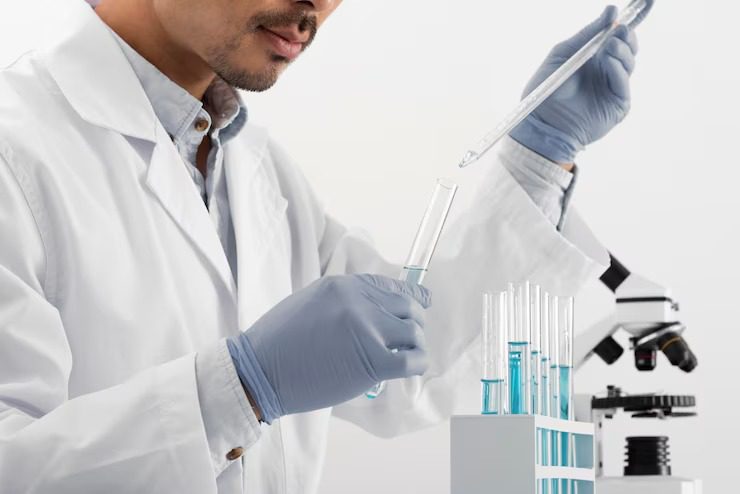
As a researcher deeply involved in biotechnology and drug development, I’ve come to truly appreciate the power of recombinant protein production. This process isn’t just a technical achievement—it’s the cornerstone of modern drug discovery. Whether we’re identifying new therapeutic targets, screening small molecules, or manufacturing biologics, recombinant proteins play a central role. Without them, many of today’s breakthroughs in medicine simply wouldn’t exist.

In this blog, I want to walk you through why recombinant protein production is so vital for drug discovery. I’ll share real insights from my own lab experience and highlight the practical impact this technology has on the development of life-saving treatments.
What Is Recombinant Protein Production?
Recombinant protein production involves inserting a gene encoding a desired protein into a host organism—commonly E. coli, yeast, insect, or mammalian cells. These hosts then express the protein, which we purify and use for research or therapeutic applications.
The beauty of this method is its flexibility. We can produce human proteins, mutated variants, fusion constructs, or proteins from pathogens—all in a controlled, scalable way.
The Role of Recombinant Proteins in Drug Discovery
1. Understanding Disease Mechanisms
Before a drug can be developed, we must understand what causes the disease at a molecular level. Recombinant proteins allow us to isolate and study proteins involved in disease pathways.
I remember when we were studying a mutated enzyme linked to a rare genetic disorder. Without recombinant production, we couldn’t have generated enough of that specific mutant protein to test its activity or screen potential inhibitors. It’s this clarity that accelerates our understanding of how diseases operate at a biochemical level.
2. Target Identification and Validation
In the early stages of drug discovery, we identify proteins that are “druggable.” These are typically enzymes, receptors, or signaling molecules that play a critical role in disease progression.
Using recombinant DNA technology, we can produce these targets in large quantities. That allows us to study their structure, function, and interaction with potential drug candidates. This step is non-negotiable. If the protein target isn’t reliable, the rest of the drug development pipeline could collapse.
3. High-Throughput Screening (HTS)
This is where things get really exciting. Once we’ve identified a target protein, we need to find molecules that interact with it—either activating or inhibiting its function.
Recombinant proteins make HTS possible. In my experience, we’ve used robotic systems to test thousands of compounds against a single recombinant protein in just a few days. If that protein wasn’t available in a pure and functional form, such large-scale screening would be out of the question.
4. Structural Biology and Rational Drug Design
The structure of a protein often holds the key to designing a better drug. Techniques like X-ray crystallography and cryo-electron microscopy require high-quality protein crystals. Where do these crystals come from? Recombinant protein production.
Thanks to this technology, we can produce sufficient protein for crystallization trials. I’ve been part of teams that identified small molecules that fit like puzzle pieces into the active sites of our target proteins—all based on the structural data from recombinantly expressed proteins.
5. Biologics and Therapeutic Proteins
Recombinant protein production isn’t just for research. It’s also used to create the drugs themselves. Insulin, monoclonal antibodies, growth hormones, clotting factors—all of these are produced recombinantly.
Unlike small molecule drugs, biologics are complex proteins that must be expressed in mammalian systems to ensure proper folding and post-translational modifications. Having access to reliable recombinant production pipelines ensures we can deliver consistent, safe, and effective therapies.
6. Biosimilars and Personalized Medicine
With patents expiring on many biologics, the demand for biosimilars is rising. Recombinant protein production enables the development of these cost-effective alternatives, ensuring broader patient access to life-saving medications.
Moreover, in the age of personalized medicine, recombinant proteins allow us to customize therapies based on a patient’s genetic profile. For example, if a cancer patient has a unique mutation in a kinase, we can produce the mutated form and test which inhibitors work best for that specific variant.
Challenges and the Need for Optimization
Of course, this process isn’t without its challenges. Some proteins are difficult to express, unstable, or toxic to host cells. Early in my career, I struggled with expressing a membrane protein in E. coli. The yields were poor, and the protein often formed inclusion bodies. Switching to a mammalian expression system saved the project.
Optimizing expression vectors, choosing the right host, fine-tuning culture conditions, and refining purification protocols—all of these require trial, error, and experience. But it’s worth the effort. The impact these proteins have on human health is immeasurable.
The Future: Synthetic Biology and Automation
As technology advances, so does recombinant protein production. Synthetic biology tools are making it easier to design optimized genes and novel protein constructs. Automated platforms now allow us to scale up expression and purification with minimal hands-on time.
In my lab, we’ve started integrating AI-powered design tools to predict which protein variants will express better or bind more tightly to drug candidates. This kind of innovation will make the drug discovery pipeline faster and more precise than ever before.
Conclusion
Recombinant protein production is not just a lab technique—it’s a lifeline in the drug discovery process. It empowers everything from understanding disease mechanisms to designing, testing, and manufacturing new therapies. The more we invest in advancing this technology, the more efficient, targeted, and personalized drug discovery becomes.
As someone working on the front lines of biomedical research, I can’t imagine doing my job without recombinant proteins. They turn theory into practice, converting genetic information into physical molecules we can study, modify, and use to save lives.
Have questions or need support with your recombinant protein project?
Contact us today—we’re here to help you accelerate your research.