Investing in the right circuit breaker is the single most important decision for protecting your property’s electrical infrastructure from catastrophic overloads and short circuits. Whether you are managing a cozy single-family home or a sprawling industrial warehouse, understanding the technical nuances between residential circuit breakers and commercial circuit breakers ensures long-term safety, code compliance, and operational efficiency. At Electrical Distribution & Control, we specialize in providing high-end electrical solutions that bridge the gap between standard home protection and heavy-duty industrial reliability.
Electrical Distribution & Control is a premier provider of advanced electrical components and distribution systems, offering expert consultancy and high-quality hardware for both private and corporate sectors. You can explore our full range of services at https://edc-electrical.com/.
Understanding Residential Circuit Breakers: The Home’s Silent Guardian
Residential circuit breakers are the unsung heroes of modern living. Most homeowners only interact with them when a hair dryer and a space heater run simultaneously, causing a “trip.” These devices are primarily designed for single-phase electrical systems, typically operating at 120V or 240V.
In a standard home, the amperage requirements are relatively modest. Most branch circuits for lighting and outlets use 15-amp or 20-amp breakers. Larger appliances like electric ranges or central air conditioning units might require 30-amp to 50-amp double-pole breakers. The primary goal of these residential units is to prevent the wires inside your walls from overheating and starting a fire. Because homes are generally “clean” environments—meaning they aren’t filled with conductive dust or extreme vibrations—residential breakers are built to be compact, user-friendly, and cost-effective.
Exploring Commercial Circuit Breakers: Powering Scale and Complexity
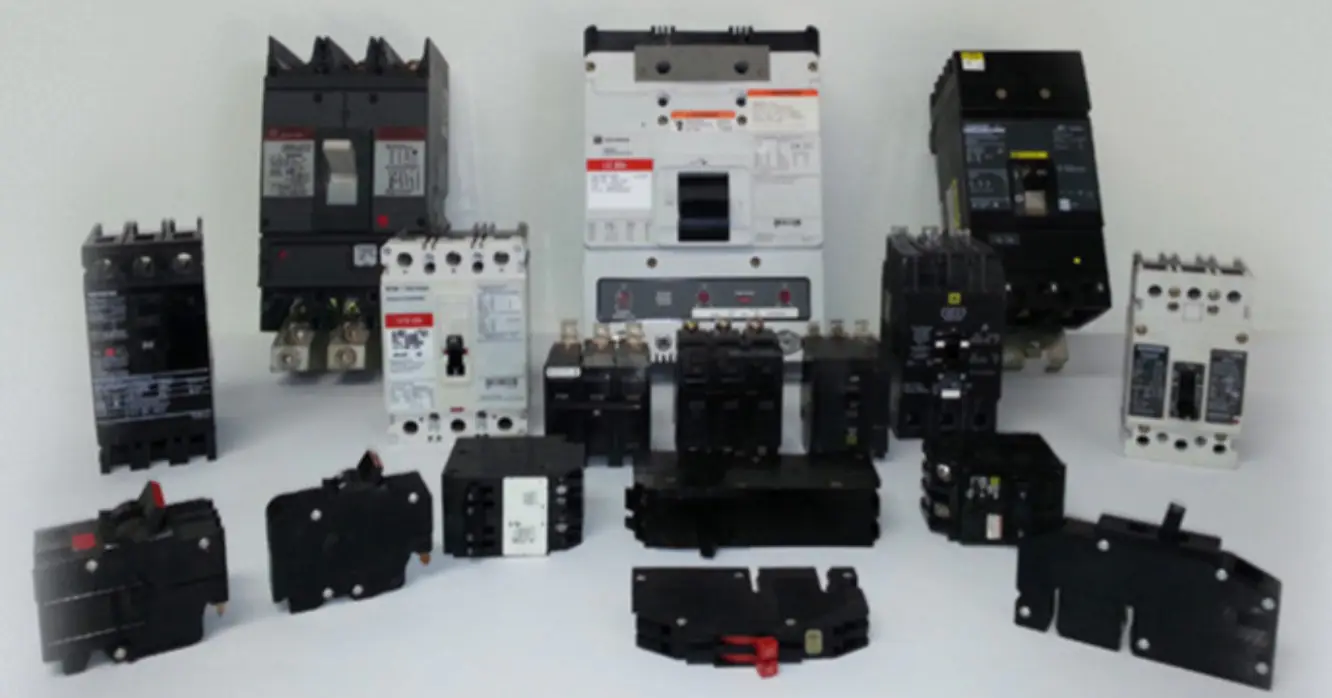
When you step into a commercial or industrial setting, the electrical demands shift dramatically. Commercial circuit breakers are engineered to handle three-phase power (often 208V, 480V, or even higher) and much higher current loads. While a home might top out at a 200-amp main service, a commercial facility might require 400, 800, or even 5,000 amps to keep its machinery and HVAC systems running.
The complexity of these breakers goes beyond just “size.” They often feature adjustable trip settings, allowing engineers to fine-tune exactly how and when the breaker reacts to a fault. This is crucial for “selective coordination,” a fancy way of saying that if a small motor fails in the back of a factory, only the nearest breaker trips, rather than shutting down the entire building’s power.
Key Differences: Amperage, Voltage, and Interrupting Capacity
The most significant technical divide lies in the Ampere Interrupting Capacity (AIC). This rating measures a breaker’s ability to safely extinguish an electrical arc during a massive short circuit without exploding.
Residential breakers typically have an AIC of 10,000 to 22,000 Amps. This is perfectly adequate for the amount of energy a local utility transformer can dump into a house. However, commercial buildings are often located much closer to massive power transformers. In a fault scenario, the surge can exceed 65,000 or even 100,000 Amps. For these environments, you need commercial-grade units with high interrupting ratings to ensure the equipment survives the event.
Pros and Cons of Residential Circuit Breakers
Choosing a residential-grade system for a home or small office has distinct advantages and a few limitations.
Pros of Residential Models
-
Cost-Effective: These units are mass-produced and highly affordable for the average homeowner.
-
Ease of Use: They feature a simple “On/Off” toggle that is easy for unskilled users to reset safely.
-
Compact Design: They fit into small, aesthetic panels that can be hidden in closets or hallways.
-
Specialized Safety: Modern residential breakers often include AFCI (Arc-Fault Circuit Interrupter) and GFCI (Ground-Fault Circuit Interrupter) technology to prevent household fires and shocks.
Cons of Residential Models
-
Limited Durability: They are not designed for hundreds of daily “switching” operations.
-
Low Heat Tolerance: Performance can degrade if installed in high-temperature environments like a factory floor.
-
Fixed Settings: You cannot adjust the “trip curve” to account for specialized equipment.
Pros and Cons of Commercial Circuit Breakers
Commercial units are the workhorses of the industry, but they come with their own set of considerations.
Pros of Commercial Models
-
High Reliability: Built with robust materials like reinforced plastics and high-grade silver alloys to withstand harsh conditions.
-
Advanced Features: Many models allow for remote monitoring and “smart” integration, which Electrical Distribution & Control frequently recommends for modern facilities.
-
Scalability: Designed to be part of a modular system where you can add subpanels and additional loads with ease.
-
High Impulse Withstand: They can survive grid surges and lightning strikes that would fry a standard residential unit.
Cons of Commercial Models
-
High Initial Cost: The advanced engineering and materials make these significantly more expensive than home units.
-
Size Requirements: They require large, heavy-duty metal enclosures and dedicated electrical rooms.
-
Complexity: Requires a licensed professional or electrical engineer to install, calibrate, and maintain.
When to Use Which: Real-World Scenarios
If you are building a backyard workshop with a few power tools, a high-quality residential circuit breaker is usually sufficient. However, if that workshop evolves into a commercial cabinet-making business with industrial dust collectors and heavy-duty saws, you have crossed the line into commercial territory.
At Electrical Distribution & Control, we often see clients try to save money by using residential-grade panels in small commercial retail spaces. While it might pass an initial inspection, the frequent “nuisance tripping” caused by commercial refrigeration or high-intensity lighting often leads to costly downtime. Conversely, using a commercial breaker in a standard home is usually overkill and physically impossible due to the different mounting styles (plug-in vs. bolt-on).
[Image showing the internal components of a circuit breaker including the bimetallic strip and magnetic coil]
Maintenance Tips for Longevity
Regardless of the type, circuit breakers are not “set and forget” devices. To ensure your system remains safe, follow these expert tips:
-
Exercise the Breaker: Once a year, manually switch your breakers off and back on to ensure the internal mechanisms haven’t seized.
-
Listen for Humming: A buzzing or humming sound coming from your panel is a sign of a loose connection or an internal failure.
-
Infrared Scanning: For commercial systems, Electrical Distribution & Control recommends annual thermal imaging to catch “hot spots” before they turn into fires.
-
Check for Discoloration: If the plastic around the breaker looks charred or melted, replace it immediately and have the busbar inspected.
The Verdict: Selecting the Right Protection
The choice between residential circuit breakers and commercial circuit breakers ultimately comes down to the “fault current” potential and the continuous load of your building. For the safety of your family and the protection of your home electronics, residential-grade units from reputable manufacturers are the gold standard. They provide exactly what is needed without unnecessary complexity.
For business owners, the stakes are higher. A single failed breaker in a data center or a hospital can have devastating consequences. In these environments, the ruggedness and precision of a commercial circuit breaker are non-negotiable.
If you are unsure which system your project requires, Electrical Distribution & Control can provide a comprehensive load analysis and recommend the exact hardware needed to keep your lights on and your equipment safe. Choosing quality today prevents the “darkness” of tomorrow.