
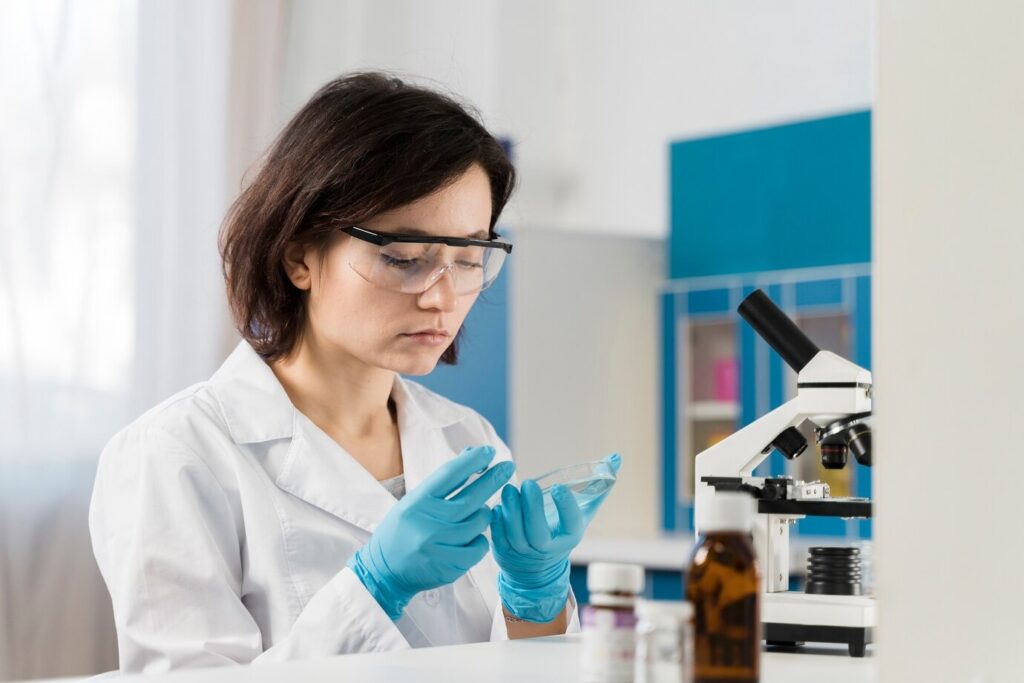
SDS PAGE (Sodium Dodecyl Sulfate Polyacrylamide Gel Electrophoresis) is a cornerstone technique in biochemistry and molecular biology for separating proteins based on their molecular weight. Accurate interpretation of SDS PAGE results heavily depends on protein concentration, as it directly influences band clarity, resolution, and quantification. Understanding the factors affecting protein concentration in SDS PAGE tests is crucial for researchers aiming for reliable and reproducible outcomes.
1. Sample Preparation and Purity
The initial step in SDS PAGE involves preparing the protein sample. The concentration of proteins in the sample can be influenced by impurities such as nucleic acids, lipids, salts, and detergents. Contaminants can interfere with protein binding to SDS, altering migration patterns and leading to uneven band intensities. For instance, excessive salts can increase the conductivity of the gel, causing protein smearing or streaking. Ensuring proper sample purification—through techniques like dialysis, precipitation, or chromatography—helps maintain accurate protein concentrations.
2. Protein Extraction Methods
The method used to extract proteins from cells or tissues affects their concentration in the final solution. Harsh extraction buffers might denature proteins or result in partial degradation, reducing detectable protein levels. Conversely, mild buffers may not fully solubilize all proteins, yielding an underrepresentation of the total protein content. The choice of extraction technique should align with the protein type and the downstream SDS PAGE analysis to avoid skewed results.
3. Protein Quantification Accuracy
Before loading proteins onto a gel, determining the exact concentration is essential. Common protein quantification methods include the Bradford assay, BCA assay, and Lowry method. Variations in assay sensitivity, interference from reagents, or improper calibration can lead to inaccurate protein concentration readings. Loading an incorrect amount of protein affects band intensity, making it challenging to compare samples or perform precise densitometric analysis. Using reliable quantification techniques reduces errors and ensures consistency across experiments.
4. Sample Loading Volume
Even with correct protein quantification, the volume loaded onto the gel influences observed concentration. Overloading can result in diffuse or overlapping bands, while underloading may produce faint, barely detectable bands. Achieving an optimal balance between volume and concentration is crucial for resolving proteins of different molecular weights. Standardizing loading volumes across samples enhances reproducibility and facilitates accurate.
5. Buffer Composition and pH
Protein stability and solubility are highly sensitive to buffer composition and pH. Buffers used in SDS PAGE, such as Tris-glycine or Tris-tricine, must maintain proteins in a denatured yet soluble state. Deviations in pH can alter protein charge or structure, affecting SDS binding and electrophoretic mobility. Additionally, the presence of reducing agents like DTT or β-mercaptoethanol helps maintain proteins in a fully denatured state, which is critical for accurate separation and concentration assessment.
6. Gel Concentration and Type
The acrylamide concentration of the gel impacts the migration of proteins and, indirectly, the apparent concentration. High-percentage gels are suitable for small proteins, while low-percentage gels better resolve larger proteins. Misalignment between gel concentration and protein size can cause band distortion, making it difficult to interpret concentration differences accurately. Gradient gels offer an effective solution for analyzing a wide range of protein sizes in a single run.
7. SDS Binding Efficiency
SDS binds to proteins in a roughly uniform ratio, conferring a negative charge that allows size-dependent separation. However, incomplete binding can occur due to protein modifications, aggregation, or the presence of hydrophobic domains. Proteins that do not fully bind SDS may migrate inconsistently, affecting band intensity and apparent concentration. Careful control of denaturation conditions and incubation times with SDS ensures consistent binding and reliable results.
8. Storage and Handling Conditions
Protein concentration can be significantly affected by improper storage and handling, leading to degradation or aggregation. Repeated freeze-thaw cycles, exposure to heat, or prolonged storage in suboptimal buffers can reduce the effective concentration of functional proteins, resulting in weak or smeared bands on SDS-PAGE gels. To minimize degradation and preserve accurate concentrations, it’s essential to store proteins at recommended temperatures with stabilizing additives.
For more detailed information on protein storage and handling, you can refer to the following resource: 👉 https://kendricklabs.com/1d/
9. Staining and Detection Methods
Finally, the method used to visualize proteins impacts perceived concentration. Coomassie Brilliant Blue, silver staining, and fluorescent dyes have different sensitivities. A faint band in a low-sensitivity stain may not indicate a low protein concentration but rather the limitations of the detection method. Choosing an appropriate staining technique based on expected protein abundance ensures accurate assessment of concentration in SDS PAGE tests.
Conclusion
Protein concentration in SDS PAGE tests is influenced by multiple interrelated factors, including sample preparation, extraction methods, quantification accuracy, buffer composition, gel type, SDS binding efficiency, storage conditions, and staining methods. Recognizing and controlling these variables is essential for obtaining reliable, reproducible, and interpretable results. Researchers who carefully optimize each step can ensure that SDS PAGE analysis accurately reflects true protein concentrations, enabling meaningful comparisons and confident conclusions.
For professional SDS PAGE services and advanced protein analysis, Kendrick Labs, Inc provides expert laboratory support and reliable testing solutions. Their expertise helps researchers achieve consistent and precise results in protein studies.