
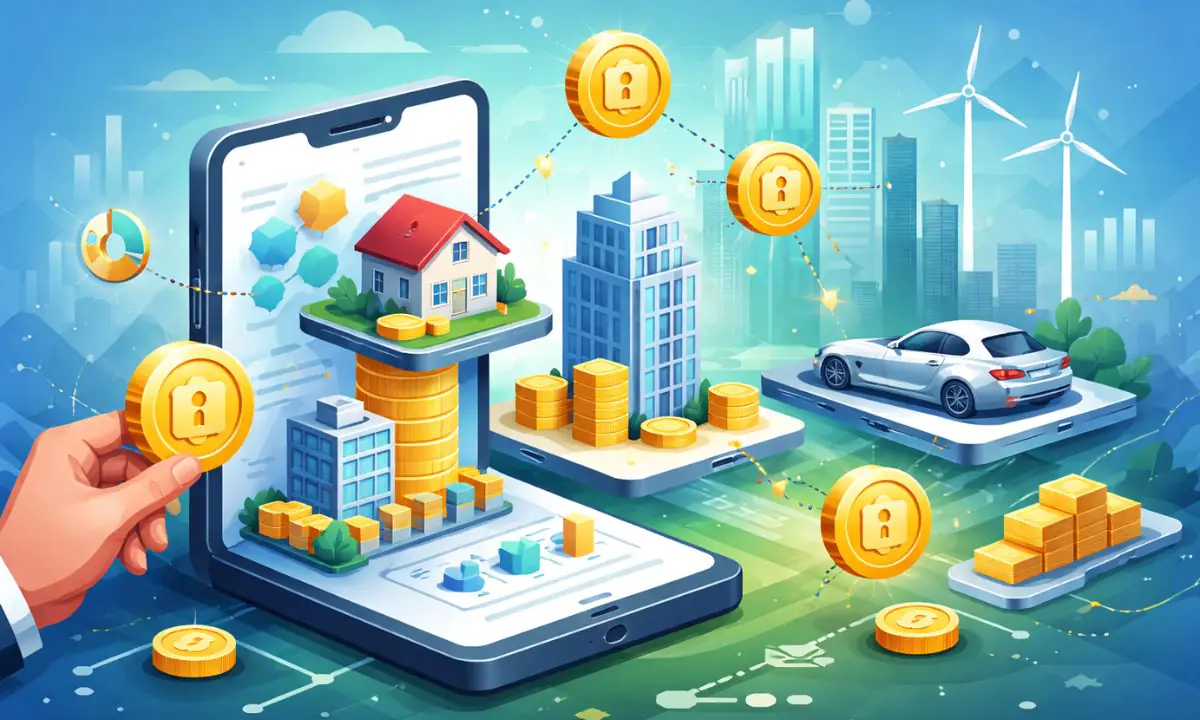
Investment options have expanded rapidly over the past decade, moving beyond stocks, bonds, and real estate into digital-first opportunities. One of the most talked-about developments in this space is Real World Asset Tokenization. It refers to the process of converting ownership rights of physical assets such as property, gold, or commodities into digital tokens stored on a blockchain network. These tokens represent a share of the underlying asset and can be traded, owned, or transferred with fewer barriers compared to conventional systems.
At the same time, traditional investing continues to remain the preferred route for many individuals and institutions due to its long history, regulatory structure, and perceived stability. This raises a practical question for modern investors: is Real World Asset Tokenization actually better than traditional investing, or is it just another trend with limited long-term value?
This blog takes a detailed look at both approaches, comparing their structure, accessibility, risks, returns, and future outlook in simple terms.
Understanding Traditional Investing
Traditional investing refers to putting money into well-established financial instruments such as equities, mutual funds, bonds, fixed deposits, and real estate. These investments are managed through banks, brokerage firms, and financial institutions.
The process is generally straightforward. An investor opens an account, selects an asset, and holds it for a certain period with the expectation of earning returns. While this system has been refined over decades, it comes with certain limitations.
One of the major issues is accessibility. High-value assets like commercial real estate or fine art are out of reach for most retail investors. Even stock markets may require a certain level of knowledge, capital, and patience.
Another concern is liquidity. Selling assets like property or physical gold can take time and involve intermediaries. Additionally, transaction costs, paperwork, and legal formalities often make the process slow and expensive.
Despite these drawbacks, traditional investing remains popular because it is familiar, regulated, and relatively stable.
What Is Real World Asset Tokenization?
Real World Asset Tokenization converts ownership of physical or tangible assets into digital tokens on a blockchain. Each token represents a fraction of the asset, allowing multiple investors to own a portion of something that would otherwise be expensive or inaccessible.
For example, instead of buying an entire property, an investor can purchase tokens that represent partial ownership. These tokens can then be traded on digital platforms, offering flexibility and convenience.
This is where RWA Tokenization comes into play. It brings together blockchain technology and real-world assets, creating a bridge between traditional finance and digital ecosystems.
A business looking to digitize assets often partners with a RWA Tokenization Company that provides technical and legal support. These firms offer RWA Tokenization Services that include asset evaluation, legal structuring, smart contract development, and platform integration.
How RWA Tokenization Works
The process of Real World Asset Tokenization follows a structured path. First, the asset is identified and evaluated. This could be real estate, commodities, or even intellectual property.
Next, legal ownership is established and divided into digital shares. These shares are then converted into tokens using blockchain technology. The tokens are issued and made available for investors through a digital platform.
This process often involves RWA Tokenizaion development teams who handle the technical aspects, including smart contracts and blockchain integration. A RWA tokenization development company may also assist with compliance requirements, ensuring that the tokenized asset meets regulatory standards.
Once the tokens are issued, they can be bought, sold, or transferred on a rwa tokenization platform development system. This makes the investment more flexible compared to traditional methods.
Accessibility and Investment Entry
One of the biggest differences between Real World Asset Tokenization and traditional investing lies in accessibility.
Traditional investments often require a significant amount of capital. Buying real estate, for instance, involves large upfront costs, loans, and long-term commitments. Even stock market participation may require knowledge and ongoing monitoring.
In contrast, RWA Tokenization allows fractional ownership. This means investors can start with smaller amounts and still gain exposure to high-value assets. It lowers the entry barrier and opens up opportunities for a wider audience.
RWA token development also supports global participation. Investors from different regions can access tokenized assets without dealing with complex cross-border regulations, although compliance still plays a role.
Liquidity Comparison
Liquidity refers to how easily an asset can be bought or sold.
Traditional assets like real estate are known for low liquidity. Selling a property can take weeks or months, and the process involves agents, legal checks, and negotiations.
Tokenized assets, on the other hand, can be traded more quickly on digital platforms. Since ownership is divided into tokens, investors can sell a portion of their holdings instead of the entire asset.
RWA tokenization development services focus heavily on building platforms that support active trading. This makes it easier for investors to enter and exit positions without long waiting periods.
However, it is worth noting that liquidity in tokenized markets depends on demand and platform adoption. Without enough participants, trading activity may still be limited.
Cost and Efficiency
Traditional investing involves multiple intermediaries such as brokers, legal advisors, and banks. Each step adds to the overall cost and time required to complete a transaction.
Real World Asset Tokenization reduces the number of intermediaries by using blockchain-based systems. Transactions are recorded digitally, reducing paperwork and administrative delays.
A RWA Tokenization Company typically offers end-to-end services, which can simplify the process for asset owners and investors alike. This includes everything from asset tokenization to platform deployment.
While initial setup costs for tokenization may be high, ongoing transaction costs are generally lower compared to traditional systems.
Risk Factors
Every investment comes with risks, and both traditional and tokenized assets have their own challenges.
Traditional investments are subject to market volatility, economic conditions, and regulatory changes. However, they benefit from established legal frameworks and investor protection mechanisms.
Real World Asset Tokenization introduces new types of risks. These include technological vulnerabilities, smart contract errors, and regulatory uncertainty. Since the concept is still evolving, laws governing tokenized assets vary across regions.
Working with a reliable RWA tokenization development company can reduce some of these risks by ensuring proper implementation and compliance.
Investors should also consider the credibility of the asset being tokenized. Not all tokenized assets are equal, and due diligence remains important.
Transparency and Ownership Records
Traditional systems rely on centralized databases to record ownership. These records can sometimes lack visibility and may require verification through third parties.
Blockchain-based tokenization provides a digital ledger where all transactions are recorded and accessible. This improves visibility and reduces the chances of disputes.
Real World Asset Tokenization Services often include secure record-keeping mechanisms that maintain accurate ownership data. This can be particularly useful for assets with multiple investors.
However, the level of visibility depends on the platform being used. Private blockchains may limit access, while public ones offer broader visibility.
Regulatory Environment
Regulation is a major factor when comparing Real World Asset Tokenization with traditional investing.
Traditional financial markets operate under well-defined laws and regulations. Investors have access to legal protection and dispute resolution mechanisms.
Tokenized assets are still navigating regulatory frameworks. Different countries have different rules, and some regions have yet to establish clear guidelines.
A RWA Tokenization Company usually works with legal experts to structure token offerings in compliance with existing laws. This includes securities regulations, tax considerations, and investor rights.
As regulations become more defined, the adoption of tokenized assets is likely to increase.
Return Potential
Returns depend on the type of asset rather than the method of investment. Both traditional and tokenized investments can offer attractive returns if chosen wisely.
However, Real World Asset Tokenization may provide additional opportunities due to fractional ownership and global participation. Investors can diversify their portfolio across multiple assets without committing large amounts of capital.
RWA token development also allows for innovative investment models, such as revenue-sharing tokens or asset-backed income streams.
That said, higher return potential often comes with higher risk. Investors should carefully assess each opportunity before investing.
Use Cases Across Industries
Real World Asset Tokenization is not limited to real estate. It is being applied across various sectors, including commodities, agriculture, art, and infrastructure.
For example, gold can be tokenized to allow investors to own small portions without physically storing it. Similarly, agricultural assets can be tokenized to provide funding for farmers while offering returns to investors.
RWA Tokenization Services are expanding to include new asset classes, making it a versatile investment approach.
Traditional investing, while still dominant, does not always offer the same level of flexibility in asset selection.
Technology and Infrastructure
The success of Real World Asset Tokenization depends heavily on technology. Blockchain networks, smart contracts, and digital wallets form the backbone of this system.
RWA tokenization development services focus on creating reliable platforms that support secure transactions and asset management. These platforms must handle user authentication, token issuance, and trading activities.
In comparison, traditional systems rely on established financial infrastructure, which may be slower but is widely trusted.
The choice between the two often comes down to an investor’s comfort level with technology.
Future Outlook
Real World Asset Tokenization is gaining attention from both startups and established financial institutions. As awareness grows and regulations become clearer, adoption is expected to increase.
Many companies are investing in rwa tokenization platform development to support this shift. These platforms aim to connect asset owners with global investors in a more efficient manner.
Traditional investing is unlikely to disappear. Instead, both systems may coexist, offering different options based on investor preferences.
In the coming years, hybrid models may emerge, combining elements of both approaches.
Conclusion
The question of whether Real World Asset Tokenization is better than traditional investing does not have a simple answer. Each method has its own advantages and limitations.
Traditional investing offers stability, familiarity, and regulatory protection. It is suitable for those who prefer a structured and time-tested approach.
Real World Asset Tokenization introduces flexibility, fractional ownership, and faster transactions. It opens up new opportunities for investors who are willing to explore digital systems.
Choosing between the two depends on individual goals, risk tolerance, and understanding of the market. For many investors, a balanced approach that includes both traditional and tokenized assets may be the most practical option.
As technology continues to evolve and financial systems adapt, Real World Asset Tokenization is likely to play an increasingly important role in the investment landscape.