
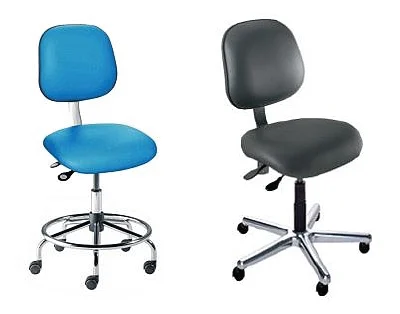
Maintaining a controlled environment requires more than high-efficiency air filtration and strict cleaning procedures. Every item inside your cleanroom can influence contamination levels, including chairs used throughout daily operations. As you move, adjust seating positions, or perform repetitive tasks, chair materials and mechanical components can release particles into the surrounding air. These particles may compromise sensitive processes, product quality, and cleanliness standards.
To reduce particle shedding from cleanroom chairs, you need to evaluate material selection, upholstery construction, surface finishes, mechanical components, and maintenance practices. Choosing appropriate seating and establishing consistent inspection procedures can help you minimize contamination risks while maintaining workplace comfort and productivity.
1. Choose Low-Particle-Shedding Materials
The materials used in your cleanroom seating directly influence particle generation. Conventional office chairs often contain exposed foam, fabric upholstery, untreated plastics, and components that can deteriorate with repeated use.
Select chairs specifically designed for controlled environments. Look for non-shedding, non-fibrous, and easy-to-clean materials that can withstand your cleaning procedures.
Consider these material characteristics:
Polyurethane upholstery: Provides a smooth, durable surface that is generally easier to clean than conventional fabric.
Vinyl surfaces: Offer non-porous construction and convenient wipe-down maintenance when compatible with your cleaning chemicals.
Stainless steel components: Resist corrosion and provide durable structural support when properly finished.
Low-shedding plastics: Help minimize particle release from exposed structural components.
Sealed surfaces: Reduce areas where dust, residues, and contaminants can accumulate.
Before purchasing, verify that the chair materials are suitable for your cleanroom classification and operating conditions.
2. Select Seamless and Non-Fibrous Upholstery
Upholstery construction is another important factor in particle control. Traditional woven fabrics can release fibers through abrasion, friction, and everyday wear. Stitching, exposed seams, and damaged coverings can also create locations where contaminants collect.
Choose cleanroom seating with smooth, seamless, or minimally seamed upholstery. Non-fibrous surfaces help reduce the possibility of loose fibers entering your controlled environment.
Inspect the upholstery for:
- Exposed stitching and loose threads.
- Cracks, peeling, or damaged coatings.
- Open seams and exposed foam.
- Rough surfaces that retain particles.
- Signs of deterioration after repeated cleaning.
If you notice damaged upholstery, replace the affected components or remove the chair from service. Continuing to use deteriorating seating can increase contamination risks.
3. Evaluate Casters and Moving Components
Chair movement can generate particles through friction between casters, flooring, and mechanical assemblies. Conventional wheels may also accumulate dust, debris, and cleaning residues.
Select cleanroom-compatible casters designed to minimize particle generation. Consider non-marking, low-shedding wheel materials that are compatible with your flooring and cleaning requirements.
You should also examine:
- Wheel construction and surface condition.
- Bearings and rotating mechanisms.
- Gas lift cylinders and adjustment assemblies.
- Connections between the seat, base, and supporting frame.
Keep moving components clean and inspect them regularly for wear. Replace damaged wheels, loose fittings, and deteriorating mechanical parts before they become contamination sources.
4. Match Chair Selection to Your Cleanroom Classification
Not every chair is appropriate for every controlled environment. Your seating requirements should reflect the cleanroom classification, process sensitivity, and contamination-control procedures.
For example, a pharmaceutical production area may have different seating requirements from an electronics assembly facility or semiconductor laboratory.
When evaluating seating, consider:
- Applicable ISO cleanroom classification requirements.
- Expected particle-generation levels.
- Chemical exposure and cleaning frequency.
- Static electricity control requirements.
- Operator movement and seating duration.
- Compatibility with the cleanroom flooring system.
Review manufacturer documentation and request relevant performance information. Avoid assuming that a chair is suitable simply because it is marketed as a cleanroom product.
Explore specialized Cleanroom Chairs for Controlled Environments to identify seating options designed for cleanroom applications.
5. Establish a Regular Cleaning and Inspection Schedule
Even appropriately designed cleanroom chairs require consistent maintenance. Dust, residues, and particles can accumulate on upholstery, wheels, adjustment mechanisms, and structural connections.
Create a documented cleaning schedule based on your contamination-control procedures and manufacturer recommendations.
Your maintenance routine should include:
- Wipe down exposed surfaces using approved cleaning materials.
- Clean casters and accessible mechanical components.
- Inspect upholstery for cracks, peeling, and surface deterioration.
- Check adjustment mechanisms for unusual friction or wear.
- Examine joints and connections for accumulated debris.
- Record maintenance activities and replacement requirements.
Use cleaning agents compatible with the chair’s materials. Aggressive chemicals can damage protective coatings, weaken upholstery, and increase particle shedding over time.
6. Reduce Friction Through Proper Chair Usage
Incorrect chair handling can accelerate material deterioration and increase particle generation. Dragging chairs across floors, repeatedly striking furniture against workstations, and overloading seating can damage wheels and structural components.
Train your personnel to follow appropriate handling practices.
Encourage operators to:
- Roll chairs smoothly rather than dragging them.
- Avoid unnecessary movement around sensitive workstations.
- Use adjustment mechanisms correctly.
- Keep chairs away from sharp equipment edges.
- Report unusual noises, damaged surfaces, or loose components.
- Follow designated seating and cleaning procedures.
These simple practices can extend chair service life and support consistent contamination control.
7. Monitor Particle Levels and Investigate Contamination Sources
If particle counts increase unexpectedly, do not assume that filtration or room airflow is the only possible cause. Furniture can contribute to contamination, particularly when components experience repeated movement or deterioration.
Include chairs in your contamination investigation process.
You can evaluate seating by inspecting its condition, reviewing maintenance records, observing operator movement, and assessing particle levels near frequently used workstations.
Where appropriate, conduct controlled particle monitoring under representative operating conditions. Compare observations with your facility’s established cleanliness limits and investigate other possible contamination sources before attributing changes to a particular chair.
Document your findings and replace seating that cannot maintain the required cleanliness performance.
8. Work With a Reliable Cleanroom Furniture Supplier
Choosing suitable seating becomes easier when you work with a supplier that understands controlled-environment requirements. Product specifications, material information, construction details, and maintenance recommendations help you evaluate whether a chair meets your operational needs.
At CleaTech LLC, you can explore laboratory and cleanroom equipment solutions designed for specialized working environments.
Before making your selection, discuss your cleanroom classification, seating requirements, cleaning chemicals, ergonomic needs, and static-control expectations with the supplier.
Conclusion
Reducing particle shedding from cleanroom chairs requires a combination of appropriate material selection, durable upholstery, low-shedding casters, preventive maintenance, and proper handling practices. When you evaluate seating as part of your overall contamination-control strategy, you can reduce avoidable particle sources and support a more consistent cleanroom environment.
Prioritize cleanroom-compatible construction, inspect furniture regularly, and replace damaged components before they compromise cleanliness. For help evaluating suitable seating solutions, Contact us today to discuss your cleanroom furniture requirements.
Frequently Asked Questions
What causes particle shedding from cleanroom chairs?
Particle shedding can result from fabric abrasion, deteriorating upholstery, damaged coatings, worn casters, friction between mechanical components, and repeated chair movement.
Which materials are best for reducing cleanroom chair particle shedding?
Smooth, non-fibrous materials such as suitable polyurethane, vinyl, and compatible low-shedding plastics are commonly used. Your selection should depend on cleanroom classification, chemical compatibility, and cleaning requirements.
How often should you clean cleanroom chairs?
Cleaning frequency depends on your facility’s contamination-control procedures, cleanroom classification, usage intensity, and manufacturer recommendations. Establish a documented schedule and inspect chairs regularly.
Can ordinary office chairs be used in cleanrooms?
Ordinary office chairs are generally not recommended for controlled environments because conventional fabric, foam, exposed seams, and standard casters may generate or retain particles. Select seating designed and documented for your application.
Do cleanroom chairs need special casters?
Yes, suitable casters can help reduce particle generation caused by friction and wear. Choose low-shedding, non-marking options compatible with your cleanroom flooring and operational requirements.
How can you identify a cleanroom chair that is shedding particles?
Inspect upholstery, seams, wheels, bearings, and mechanical connections for visible deterioration. Review particle-monitoring results and investigate seating as one possible contamination source.
Does ergonomic design affect cleanroom contamination control?
Ergonomic design supports proper posture and reduces unnecessary operator movement. However, ergonomic features should also use cleanroom-compatible materials and construction to avoid introducing additional contamination sources.