
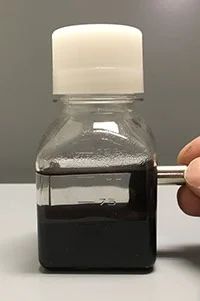
Magnetic separation time plays an important role in antibody purification, particularly when you use magnetic beads to capture immunoglobulin G (IgG) from complex biological samples. If you separate beads too quickly, some particles may remain suspended, leading to bead loss and inconsistent recovery. Excessive separation time, however, can slow your workflow without providing meaningful improvements in sample clarity. By evaluating magnetic separation time systematically, you can achieve reliable bead collection, improve antibody recovery, and maintain consistency across purification experiments.
Why Does Magnetic Separation Time Matter?
When you use Protein A magnetic beads, the magnetic field attracts particles toward the collection surface, allowing you to separate captured antibodies from the surrounding liquid. The required time depends on several factors, including bead size, magnetic responsiveness, sample viscosity, particle concentration, and magnet strength.
An appropriate separation time helps you:
- Recover magnetic beads efficiently with minimal particle loss.
- Reduce unbound protein and sample contaminants.
- Maintain consistent antibody recovery between experiments.
- Minimize unnecessary processing delays.
- Improve reproducibility across multiple samples.
You should establish the separation time experimentally rather than assuming that every sample requires the same duration.
1. Understand Your Magnetic Bead Characteristics
Start by reviewing the physical and functional properties of your magnetic beads. Particle size, magnetic core composition, surface coating, and ligand density can influence their response to an external magnetic field.
Smaller particles may require more time to collect than larger particles under comparable conditions. Similarly, differences in magnetic responsiveness can affect how quickly beads move toward the magnet.
When evaluating Magnetic Beads Protein A, review the manufacturer’s specifications for particle size, binding capacity, recommended magnetic separation conditions, and storage requirements.
Use these specifications to establish an initial experimental range before optimizing your separation procedure.
2. Establish a Baseline Separation Time
Choose a consistent sample volume, bead concentration, and magnetic separation device. Begin with the manufacturer’s recommended separation time whenever available.
Observe the beads during collection and record how long they take to form a clearly visible pellet or concentrated collection at the magnet.
You can evaluate several time points, such as 30 seconds, 60 seconds, 90 seconds, and 120 seconds, provided these intervals are appropriate for your bead system.
At each interval, document:
- The amount of visible bead material remaining in suspension.
- The clarity of the separated supernatant.
- The consistency of bead collection.
- Any visible particle aggregation.
- The ease of removing the supernatant without disturbing the beads.
Your baseline experiment will help identify the approximate time required for efficient magnetic collection.
3. Evaluate Separation Efficiency at Different Time Points
A single observation may not provide enough information to determine the ideal separation time. Instead, compare multiple time points under controlled experimental conditions.
Divide equivalent samples into separate tubes containing the same bead concentration and sample volume. Apply identical mixing and magnetic separation procedures, changing only the separation duration.
After each interval, carefully examine the supernatant for residual magnetic particles. If possible, use turbidity measurements, particle analysis, or another suitable quantitative method to assess incomplete separation.
You should also evaluate the amount of target antibody recovered after the purification process.
The ideal separation time should provide effective bead collection without unnecessarily extending processing time or compromising recovery.
4. Consider Sample Volume and Viscosity
Sample characteristics can significantly influence magnetic separation performance. Larger sample volumes may increase the distance particles must travel toward the magnetic collection surface.
Highly viscous samples can also slow particle movement. For example, serum, plasma, concentrated protein solutions, and crude lysates may behave differently during magnetic separation.
To evaluate these effects, test representative sample types rather than relying exclusively on buffer-based experiments.
Maintain consistent sample-to-bead ratios and compare separation performance across different sample volumes. If you observe slower collection in viscous samples, consider adjusting the sample preparation procedure or magnetic separation duration.
5. Assess Magnet Strength and Positioning
Your magnetic separation device directly affects collection time. Different magnetic racks can produce different field strengths and magnetic field distributions.
Check whether your tubes fit securely against the magnetic collection surface. Consistent positioning helps reduce variation between experiments.
During optimization, maintain the same magnet, tube type, sample volume, and placement. Avoid moving tubes unnecessarily while magnetic collection is taking place.
If bead collection remains incomplete despite longer separation times, investigate magnet compatibility and positioning before simply extending the incubation period.
6. Monitor Bead Loss and Antibody Recovery
Fast separation is not necessarily effective separation. You must determine whether the selected duration supports both bead recovery and target antibody purification.
Measure bead carryover in the supernatant when suitable analytical methods are available. Also assess antibody concentration or recovery using an appropriate protein quantification method.
For reliable comparisons, calculate antibody recovery using the initial target amount and the amount recovered after purification.
You should also examine purity through SDS-PAGE, Western blotting, or another suitable analytical technique.
These measurements help you distinguish between efficient magnetic collection and genuinely successful purification.
7. Standardize the Separation Procedure
Once you identify a suitable separation time, document the complete procedure so you can reproduce the results.
Include the following parameters:
- Magnetic bead concentration and volume.
- Sample volume and composition.
- Mixing duration and intensity.
- Magnetic rack or separator specifications.
- Separation time.
- Supernatant removal technique.
- Washing and elution conditions.
Repeat the experiment using independent samples to confirm that your selected conditions produce consistent results.
Standardization is particularly important when you process multiple samples or transfer a laboratory-scale protocol into a higher-throughput workflow.
8. Identify Common Magnetic Separation Problems
If your magnetic separation results vary, investigate the underlying cause before changing several parameters simultaneously.
Slow bead collection: Check sample viscosity, magnet strength, particle properties, and tube positioning.
Residual beads in the supernatant: Extend the separation time incrementally and evaluate whether the magnetic rack provides adequate collection.
Bead aggregation: Review storage conditions, mixing procedures, and sample compatibility.
Inconsistent antibody recovery: Examine bead binding capacity, sample-to-bead ratio, washing conditions, and elution efficiency.
Changing one variable at a time makes it easier to identify the source of performance differences.
Choose Reliable Magnetic Beads for Consistent Purification
Evaluating magnetic separation time requires more than observing how quickly particles collect against a magnet. You should consider bead properties, sample characteristics, magnetic field strength, particle recovery, and antibody purification performance together.
By applying controlled experiments and documenting your results, you can establish reproducible separation conditions that support efficient IgG capture and reliable downstream analysis.
Lytic Solutions, LLC provides molecular biology tools and affinity reagents for protein research and purification workflows.
If you need assistance selecting suitable magnetic bead products or evaluating purification requirements, Contact us today to discuss your application.
Frequently Asked Questions
What is magnetic separation time in Protein A magnetic bead purification?
Magnetic separation time is the duration required for Protein A magnetic beads to collect against a magnetic surface, allowing you to remove the surrounding liquid during antibody purification.
How do you determine the ideal magnetic separation time?
Test multiple separation intervals under consistent experimental conditions. Evaluate residual beads in the supernatant, bead recovery, and antibody purification results to identify an appropriate duration.
Does bead size affect magnetic separation time?
Yes. Particle size, magnetic core composition, and magnetic responsiveness can influence collection speed. Smaller particles may require longer separation under otherwise comparable conditions.
Can sample viscosity increase magnetic separation time?
Yes. Highly viscous samples can slow particle movement toward the magnetic surface. You should evaluate separation performance using representative sample matrices.
What happens if you remove the supernatant too early?
Premature supernatant removal can cause incomplete bead collection and particle loss, potentially reducing antibody recovery and increasing experimental variability.
Does magnet strength influence Protein A bead separation?
Yes. Magnetic field strength and distribution influence particle collection. An appropriate magnetic separator helps achieve efficient and consistent bead recovery.
How can you identify incomplete magnetic bead separation?
Look for suspended particles, residual beads in the supernatant, or inconsistent bead recovery. Turbidity measurements and particle analysis can provide additional evidence.
Should you use the same separation time for every sample?
Not necessarily. Sample viscosity, volume, bead concentration, and composition can affect collection performance. Validate separation conditions for each representative sample type.
Can longer magnetic separation improve antibody purification?
Longer separation may improve bead collection when the initial duration is insufficient. However, excessive separation does not automatically improve antibody purity or recovery.
Why is separation time standardization important?
Standardized separation time reduces procedural variation, supports reproducible bead recovery, and helps maintain consistent antibody purification results across experiments.