
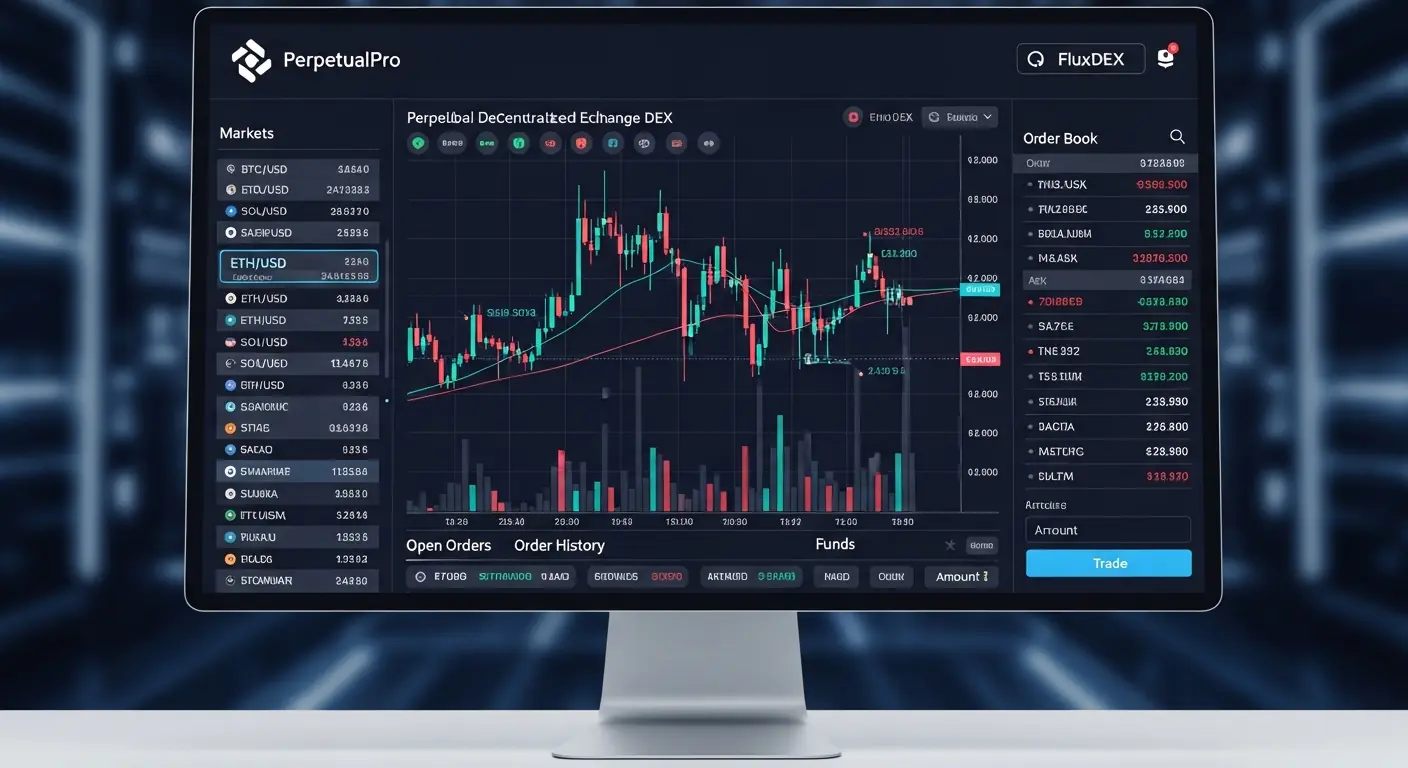
Perpetual decentralized exchanges are moving from a niche DeFi product into a core layer of crypto market structure because they combine the biggest revenue engine in digital assets, derivatives, with the transparency and self-custody of onchain finance. Coinbase noted in its 2025 shareholder letter that derivatives account for roughly 80% of global crypto trading volume, which explains why builders increasingly see perpetuals, not spot swaps, as the highest-value category to innovate in. At the same time, onchain derivatives activity is no longer theoretical. DefiLlama’s perpetuals dashboard shows dozens of active protocols competing for volume, while platforms such as Hyperliquid, Vertex, SynFutures, GMX, and dYdX have each demonstrated that traders will move onchain when execution quality is strong enough.

What makes perpetuals especially attractive is product design. Unlike traditional futures, perpetual contracts do not expire, so traders can keep exposure open indefinitely as long as collateral remains sufficient. To keep the contract price close to the spot index, exchanges use a funding-rate mechanism: when perpetual prices trade above spot, longs typically pay shorts, and when they trade below spot, shorts pay longs. Binance’s futures documentation describes this structure as the core tool for price convergence. This mechanism, combined with leverage, turns perpetuals into a far more capital-efficient trading instrument than spot. A trader does not need to fully fund a directional view; they can deploy smaller collateral, increase notional exposure, and hedge or speculate with greater precision. That is one reason leverage products tend to drive much higher turnover than cash markets.
Understanding Perpetual DEXs from the Ground Up
From a builder’s perspective, the central challenge is closing the gap between centralized exchange performance and decentralized exchange trust guarantees. Centralized venues still dominate on raw speed, low latency, and deep market-making networks, but they require users to surrender custody and accept opaque internal risk management. Decentralized perpetual venues compete by making execution rules, liquidations, and collateral flows far more transparent. Hyperliquid emphasizes that every order, cancel, trade, and liquidation occurs onchain with one-block finality, while dYdX’s documentation highlights a different route: a decentralized design with offchain orderbook information to improve throughput. Those examples reveal the market’s core architectural trade-off: higher decentralization often increases system complexity, and better performance usually requires some hybridization.
Demand comes from both retail and sophisticated users. Retail traders want leveraged directional exposure without trusting a centralized custodian, while advanced users care about basis trades, delta-neutral funding strategies, and treasury hedging. Protocol design has responded accordingly. GMX routes orders against liquidity pools rather than a traditional order book, while dYdX and Hyperliquid lean into order-book-style trading experiences that feel closer to professional exchanges. For builders, the opportunity is clear: design a perpetual DEX that feels as fast and intuitive as CeFi, but preserves the openness, auditability, and composability that only DeFi can offer.